The Benefit of Garudusana Or Eagle Pose With A Yoga Block
When standing on a yoga block in Eagle pose, your feet, ankles, and entire lower body is doing something quietly extraordinary.
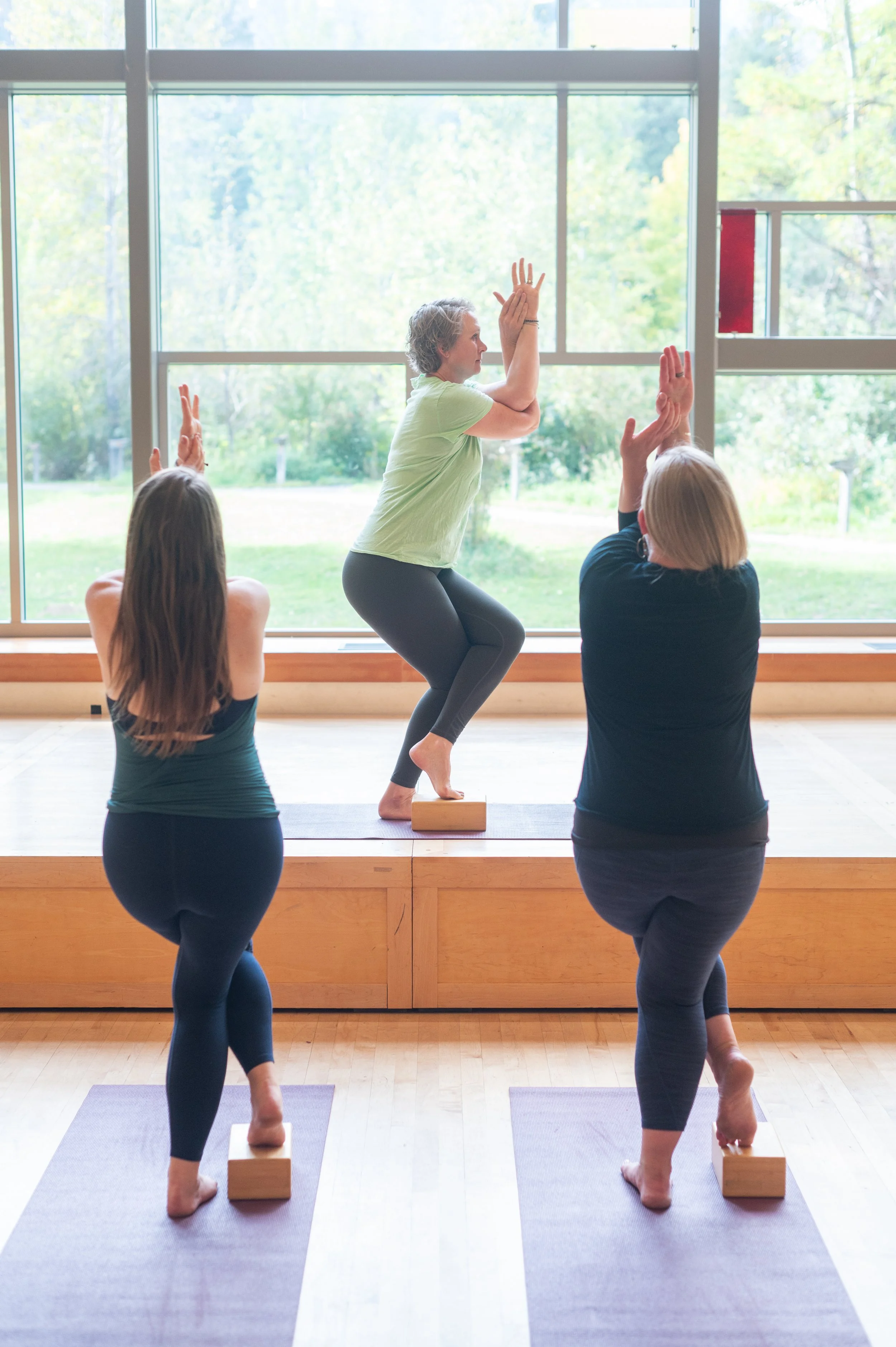
What are the benefits of a yoga block?
When you stand on a yoga block, your foot is no longer resting on a flat surface. The edges of the block ask your foot to wake up, every small muscle, every tiny joint, the arch, the heel, the toes. Your ankles begin to work in a way they simply don’t on flat ground. Once you add eagle arms with arms crossed and lifted, palms pressing together, elbows drawing away from the body, your whole system is engaged. The upper body creates a gentle counter-tension that draws the spine long. The arms open the back of the shoulders. And down below, your feet and ankles are doing quiet, diligent work that most of us never give them.
“Our feet are our foundation. When they’re awake and responsive, everything above them, our knees, hips, spine, has a chance to find its own ease.”
What are the benefits of eagle pose yoga?
Let’s talk about what’s happening beneath the surface when you practise Eagle Pose on a block.
Foot and ankle strength. The intrinsic muscles of the foot — the small muscles that support the arch and stabilise the toes — are chronically underused in most of us. Shoes, flat floors, and sedentary habits mean they rarely get challenged. Standing on a block, especially in a pose that requires balance, wakes these muscles up in a way that has real consequences for how we move through daily life.
Balance challenges like this one train your nervous system to respond quickly and accurately to changes in your footing. That’s not just useful on the yoga mat. It’s useful on uneven pavement, on a hiking trail, on a ski slope.
Shoulder and upper back opening. Eagle arms are a wonderful antidote to the rounded, forward-collapsing posture that most of us carry from screens and desks. The crossing of the arms creates traction across the upper back, releasing tension between the shoulder blades. The lift of the elbows invites space into the back of the shoulders and neck.
Focus and presence. There is something about balance poses that quietly insists on your full attention. You cannot be somewhere else mentally when your body is asking you to stay. Eagle Pose on a block is, in this sense, a moving meditation. The challenge of the ground focuses the mind on the present moment in a way that few other things can.
How to try it yourself
You’ll need one yoga block and a wall nearby if you’d like something to touch for reassurance.
Start by simply standing on your block with both feet. Notice what your feet are doing. Feel the edges of the block. Let your toes spread. Take a few breaths here before you do anything else.
When you feel ready, bring your arms into Eagle position. Cross your right arm under your left at the elbow, and either bring the backs of the hands together or, if your shoulders allow, wrap the forearms so the palms touch. Lift the elbows to shoulder height and gently draw them away from your face to deepen the stretch across the upper back.
Stay here with both feet on the block for several breaths. Notice how the arms affect your balance, the shift in weight distribution, the way the upper body influences what’s happening in your feet.
When you’re ready to deepen the challenge, shift your weight onto one foot. Keep a very gentle micro-bend in the standing knee — never lock it straight. Let the other foot hover, or rest the toes lightly on the block for support. Breathe. Stay for five to eight breaths, then switch sides.
A few things to keep in mind
This pose asks quite a lot of the ankles, so if you’re recovering from an ankle injury or working with significant instability, start with the block on its lowest setting (flat side down) and keep both feet on the block until you’ve built some confidence.
If shoulder issues mean the full Eagle arms aren’t available to you today, simply cross the arms at the wrists with elbows bent, like giving yourself a hug. You’ll still get the upper back benefit with much less demand on the shoulder joints.
And if you wobble that’s ok. Wobbling is learning.
Why I keep coming back to this pose
I’ve been teaching yoga for more than two decades, and the poses I return to most are the ones that ask you to pay attention, that build something quietly over time, that connect what’s happening in your body to how you move through the world.
Eagle Pose on a block is one of those poses. It’s accessible enough that a complete beginner can find their way into it. It’s rich enough that a seasoned practitioner can spend years refining it. And what it builds; foot strength, ankle stability, balance, proprioception, shoulder opening, focused presence — all of that matters whether you’re stepping onto a yoga mat, heading out for a trail run, or simply navigating the beautiful complexity of being in a body.
Give it five minutes this week. See what you notice.
Want to explore this in a class or retreat setting?
Accessible yoga poses like this one, are at the heart of how I teach. Whether you’re joining me for a day-long yoga retreat in Leavenworth exploring the virtual library, or coming on retreat, you’ll find a practice that meets you where you are and gently challenges you to grow.